Delivery App Commissions Eating Your Profit? How to Manage Them Smartly
Delivery-app commissions can eat a big slice of your margin per order. Learn your true cost per order, price delivery items right, and move customers to your own zero-commission channels.
Delivery apps bring you orders, no argument there. But at the end of the month you open the books and a big slice of your sales has gone to commission. The problem isn't the apps themselves. The problem is working with them without knowing your true cost per order. In this article we break it down practically: know what an order actually costs you, price it right, and start building your own channels that carry no commission at all.
Calculate your true cost per order
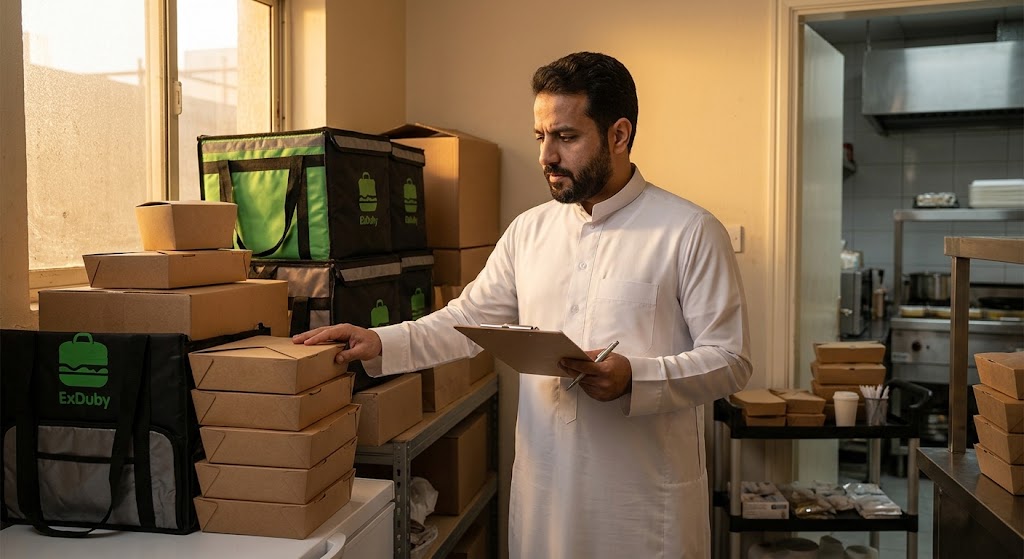
Most owners look only at the commission rate (say, a set percentage of the order value) and forget the real cost is higher. An order from a delivery app isn't just the food price minus commission. You've got ingredient cost, delivery-specific packaging, your staff's time, and sometimes the app's own discounts and promotions.
To see where you really stand, you need the order net of all of that. This is where good reports earn their keep: when every order, whether from an app or from your own channels, lands in one system, you can compare margin by channel with real numbers instead of gut feel.
Price delivery items correctly
The biggest mistake owners make is using the same price in the restaurant and on the app. The result is that you sell on the app at a razor-thin margin, and sometimes at a loss without realizing it. The fix isn't to squeeze the customer. The fix is to build your delivery price so it covers the commission and still leaves you a reasonable profit.
- Know the exact commission on every app you work with, not a rough guess.
- Build a separate delivery menu price that covers commission and packaging; don't copy your dine-in price.
- Push your high-margin items and keep them visible and clear on the app menu.
- Watch promotions: a deep discount on an already thin-margin item means selling at a loss.
The idea is to work with the apps by decision, not by habit. Once you know your number, you can choose which items go on delivery and which stay exclusive to your own channels.
Move customers to your own zero-commission channels
This is the most important point of all. The apps are a great way to reach new customers, but your goal is for the customer who tried you once to come straight back to you next time. Because every order through your own channel carries no commission, the full margin stays with you.
With Loqma you have your own sales channels: an online store under your restaurant's name, and a QR code on the table where the customer orders and pays, all with zero commission on your sales. You can drop a small card into every delivery order with your QR code and store link, or offer a little something to customers who order from you directly. That way you use the apps as a front door and gradually move customers to your channel.
Manage every delivery order from one screen
If you work with more than one app, you probably have more than one tablet on the counter, each pinging on its own. That setup loses orders, confuses the kitchen, and multiplies data-entry mistakes. When you pull every order into a single screen, things get calmer and faster.
- All orders in one place
App orders, online-store orders, and QR orders all land on the same cashier, with no jumping between devices.
- The kitchen works in order
Every order goes straight to the kitchen display (KDS), so no ticket gets lost and no order waits without reason.
- Invoice and VAT automatically
E-invoicing is built in and compliant with the Zakat, Tax and Customs Authority requirements, and VAT is calculated on every order without you checking it by hand.
- See everything in reports
At the end of the day you know how much you sold per channel and how much you made on each unit, and you decide on real numbers.
Most importantly, the cashier keeps working even if the internet drops, and syncs every order automatically the moment the connection returns, so nothing gets lost during the rush.
Bottom line: apps are a tool, not a partner who decides for you
Delivery apps work well when you use them with awareness: know your cost, price right, and treat them as a door to attract new customers. Then work on moving those customers to your own zero-commission channels, and manage everything from one system. That way orders keep growing and the margin stays in your pocket, not the app's.
Related articles
Ready to see Loqma in action?
Book a quick demo and we'll show you how one system makes your whole day easier.